Accounts Payables: Build a Controlled Process
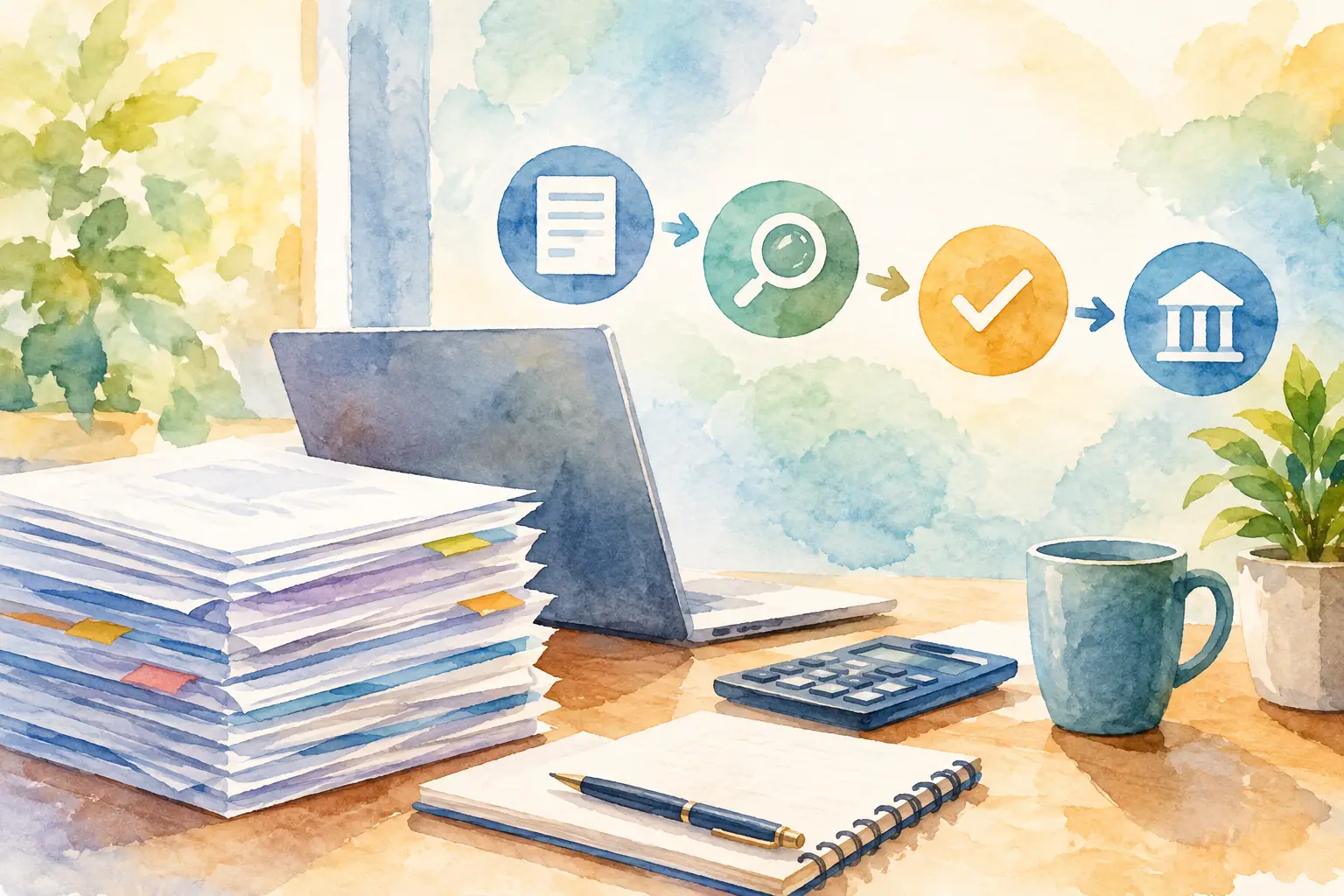
An invoice arrives in a shared inbox. Someone forwards it to a manager. The manager replies three days later, but no one knows whether finance saw the message or whether the bill has already been paid. That small gap is where late fees, duplicate payments, and strained supplier relationships begin. Accounts payables, more commonly called accounts payable, need more than an inbox and a spreadsheet. They need a controlled process that shows who submitted an invoice, who approved it, and what happens next.
What accounts payables control actually means
Accounts payable is the money your business owes suppliers for goods and services already received. But the operational work is larger than recording a liability. Your team has to collect invoice details, confirm that the expense is legitimate, route it to the right decision-maker, keep payment timing visible, and retain documentation that stands up to review.
When those steps happen across email threads, chat messages, and disconnected files, ownership becomes unclear. An employee may assume their manager approved a charge. A manager may assume finance has scheduled payment. Finance may not know whether a bill is disputed, partially paid, or waiting on missing information. The result is not simply extra administrative work. It is weak control over cash leaving the business.
A disciplined process turns each invoice into a visible record with a clear state. It is submitted, reviewed, approved or rejected, scheduled, paid, or partially paid. Each transition should have an owner and a timestamp. That is the practical foundation of accounts payable control.
Start with clean invoice intake
The approval process cannot repair an invoice record that is incomplete from the start. Require the person submitting a bill to enter the supplier, invoice amount, invoice date, due date, and a short description of what the business received. They should also attach the source invoice and identify the appropriate approver.
This is not about adding friction for its own sake. A few required fields prevent the back-and-forth that slows payment down later. If the supplier name is unclear or the amount does not match the attachment, the issue can be addressed before the invoice reaches an approver.
Intake rules should reflect the way your company buys. A marketing software renewal may need a department leader's approval, while a facility expense may go to operations. For purchase-order-based spending, include the purchase order number or receiving confirmation. For recurring bills, preserve the same approval standard even when the invoice feels familiar. Familiarity is not evidence that a charge is correct.
Route approvals to the person accountable for the spend
Approvals work when they are assigned deliberately, not when an invoice is sent to a general group and everyone assumes someone else will respond. The right approver is usually the person who can verify the business purpose, the terms, and the budget impact of the charge.
Set approval paths by department, supplier type, spending threshold, or a combination of those factors. A $200 office supply purchase and a $25,000 annual contract should not necessarily follow the same route. Higher-value or unusual invoices may require a second review from a finance manager or controller. The trade-off is speed versus oversight, so keep the rules proportionate to the risk.
Approvers also need enough context to make a decision quickly. Show the invoice, the supplier, amount, due date, submitter, and relevant notes in one place. A vague request for approval creates delays. A complete request lets a manager confirm the expense and act.
Clear escalation rules matter as well. If an approver is out of office or an invoice is close to its due date, the team should know who can reassign or escalate it. A process that depends on one person's inbox is not a controlled process.
Keep approval records audit-ready
A verbal yes, a reaction in a chat channel, or an email reply may answer a short-term question, but those records are hard to retrieve and easy to misinterpret. Your business needs a permanent record of the decision: who approved or rejected the invoice, when they acted, and any comment they provided.
Immutable approval records create accountability without creating drama. They establish the facts when finance needs to answer simple but critical questions: Was this invoice authorized? Did the approver see the final amount? Why was payment delayed? What changed after the first review?
This documentation is useful well before an external audit. It helps controllers investigate exceptions, supports month-end close, and reduces the time spent reconstructing decisions from old messages. It also protects approvers. A manager should not have to defend a purchase months later based on memory alone.
Access controls are part of the record. Employees should be able to submit invoices and monitor their own requests without seeing company-wide payment data. Department supervisors should see the invoices they must approve. Finance administrators need broader oversight, but not every user needs that level of visibility. Role-based permissions protect sensitive information while keeping work moving.
Separate approval from payment status
Approval does not mean payment has been made. Treating those statuses as the same creates avoidable confusion for both internal teams and suppliers. An invoice can be approved but waiting for its due date, held because of a cash decision, partially paid, or paid in full.
Your accounts payable process should make these distinctions obvious. Finance needs a current view of outstanding obligations by supplier, amount, due date, and status. Department leaders need to know whether a bill they approved is still pending payment. Employees who submitted an invoice should not have to ask finance for an update every time a supplier follows up.
Partial payments deserve particular attention. They are common when a supplier accepts a deposit, when a disputed portion is withheld, or when payment is split across periods. If the system only shows paid or unpaid, teams lose the real picture. Track the amount paid, the balance remaining, and the reason for any hold. That keeps the ledger, the payment plan, and the supplier conversation aligned.
Use exceptions to strengthen the process
Not every invoice will follow the standard path. A duplicate bill may arrive. A supplier may change banking details. An amount may exceed the original agreement. An invoice may be submitted after its due date. These cases should not be managed through side conversations that disappear once the immediate problem is solved.
Define how exceptions are flagged, who investigates them, and who can release a hold. For example, invoices with a changed supplier payment profile may require finance verification before any payment action. Bills above a defined threshold may require an additional approval. Invoices missing a valid attachment may return to the submitter instead of sitting indefinitely in a queue.
The goal is not to turn every edge case into a committee meeting. It is to make exceptions visible early, assign them to an owner, and preserve the reason for the resolution. That discipline prevents the same issue from becoming a recurring surprise.
Measure the friction that affects cash and trust
You do not need an enterprise dashboard to improve accounts payable. Start with a few operating measures: how long invoices wait for approval, how many are overdue, how often invoices are submitted with missing information, and how many payment-status questions finance receives each week.
These signals reveal where the process is breaking down. If approval time is increasing, the issue may be unclear routing or overloaded managers. If invoices are frequently overdue, intake may be happening too late. If finance is constantly answering status questions, payment visibility is not reaching the people who need it.
A focused workflow platform such as UTUMATE can centralize submission, approval routing, payment-status tracking, and audit documentation in one controlled workspace. The value is straightforward: fewer handoffs hidden in email, clearer ownership at every stage, and a reliable record when questions arise.
The best accounts payable process is not the one with the most rules. It is the one your team can follow consistently when work is busy. Give every invoice a clear path, give every decision an accountable owner, and make the current payment status easy to see. Suppliers get timely answers, finance gets cleaner records, and your business keeps control of the commitments it has already made.